CARCARETOOL VEHICLE GUIDE

Toyota 86

Toyota 86 — 2013–present, 2-door fastback coupé, 2.0 L ''4U-GSE''/''FA20'' H4. Explore engine specifications, fuel economy, dimensions, tire sizes, seating, maintenance and tire-pressure guidance.
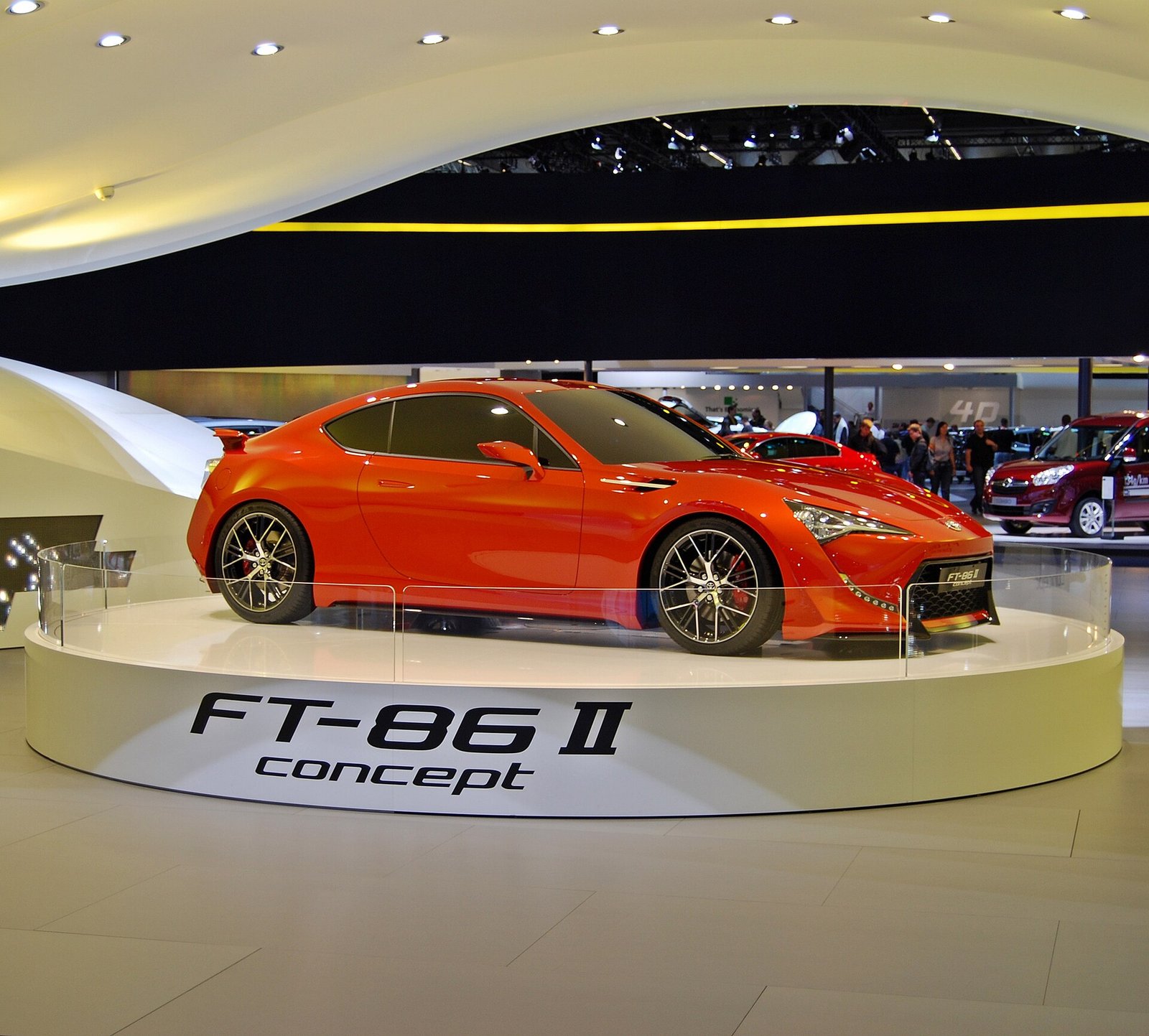
Toyota 86
Engine2.0 L ''4U-GSE''/''FA20'' H4
Transmission6-speed Toyota TL70 (Aisin AZ6) manual; 6-speed A960E automatic

About the Toyota 86

Toyota 86 is a 2-door fastback coupé in the sports car (s) class, with source data covering 2013–present. The available vehicle data lists 2.0 L ''4U-GSE''/''FA20'' H4 as an engine configuration, paired with 6-speed Toyota TL70 (Aisin AZ6) manual; 6-speed A960E automatic and a Front-engine, rear-wheel-drive layout. Public source material describes the model in the context of its design, market positioning and vehicle history.

This Toyota 86 guide focuses on the details drivers commonly want to know, including engine information for 2.0 L ''4U-GSE''/''FA20'' H4 and 6-speed Toyota TL70 (Aisin AZ6) manual; 6-speed A960E automatic transmission information. Exact specifications should be matched to the relevant model year and market.

Toyota 86 specifications at a glance

Use this table for the model-level essentials. Exact figures may vary by year, trim, engine and market.

Make Toyota
Model 86
Model years 2013–present
Body style 2-door fastback coupé
Vehicle class Sports car (S)
Manufacturer Toyota; Subaru
Production January 2012 – present
Market / country CA, ES, FI, LU, MY, NL, NZ, UA, US

Engine, transmission and performance

Engine information for the Toyota 86 includes 2.0 L ''4U-GSE''/''FA20'' H4.. Transmission information includes 6-speed Toyota TL70 (Aisin AZ6) manual; 6-speed A960E automatic.. The listed drivetrain/layout is Front-engine, rear-wheel-drive.

Engine 2.0 L ''4U-GSE''/''FA20'' H4
Transmission 6-speed Toyota TL70 (Aisin AZ6) manual; 6-speed A960E automatic
Drivetrain / layout Front-engine, rear-wheel-drive

Dimensions, weight and practicality

Dimensions and capacity figures are presented as published source data when available.

Wheelbase 2570 mm (101 in)
Length Standard 86/BRZ/FR-S:; 4240 mm (167 in); Subaru BRZ tS:; 4260 mm (168 in); Toyota 86 special models:; 4280 mm (169 in) (GR Sport); 4285 mm (169 in) (14R); 4290 mm (169 in) (GR/GRMN); 4310 mm (170 in) (Style Cb); 4335 mm (171 in) (14R-60)
Width 1775 mm (69.9 in) (standard 86/BRZ/FR-S models); 1790 mm (70.5 in) (Toyota 86 GR)
Height 1285 –
Kerb / curb weight Toyota 86:; 1190 –; Subaru BRZ:; 1190 –; Scion FR-S:; 2758 –

Toyota 86 performance and economy

Powerout 200 –

Toyota 86 other specifications

Name Toyota 86 / Subaru BRZ
Image 2022 Toyota GR86 Premium in Halo, Front Right, 04-10-2022.jpg
Caption 2022 Toyota GR86 Premium (ZN8, US)
Aka Subaru BRZ; Toyota GT86 (Europe, 2012–2021); Scion FR-S (North America, 2012–2016); Toyota GR86 (2021–present); Toyota FT86 (Brunei, Nicaragua and Jamaica)
Sp uk
Model Code ZN6 (Toyota/Scion); ZC6 (Subaru)

Toyota 86 features and equipment

Features shown below are tied to the available source material for this model. Equipment can vary by year, trim and market.

Standard or documented features

This model is available with only a six-speed manual transmission and comes with unpainted bumpers and mirrors, 16 inch steel wheels, simpler interior trim components, analogue speedometer and no stereo or air conditioning
The G model adds all the interior components missing from the RC, plus a fully painted exterior and 16 inch alloy wheels and the availability of an automatic transmission
The GT86 model adds high intensity discharge headlights with LED daytime running lights
fog lamps, automatic climate control, keyless start with engine start button, 17 inch alloy wheels, chrome exhaust tips, white tachometer face with analogue and digital speedometer, silver accents on the centre dash and steering wheel, aluminium pedals
The top-of-the-range GT Limited adds leather and Alcantara seating and a rear spoiler
In Europe, GT86 models are generally the same as the Japanese 86 GT with a red/black leather/Alcantara interior with red stitching
In the United Kingdom, the Japanese G model is sold as the GT86 Primo and the car has also been available as a limited edition Toyota Racing Development "TRD GT86", which features: 18 inch forged aluminium wheels with Yokohama Advan Sport tyres
full bodykit with front and side skirts
rear spoiler and new diffuser
quad-exhaust system
TRD-branded detailing on the filler cap, radiator cap and gear knob
In Australia, the GT is the equivalent of the Japanese G model but with only an all black interior trim and standard radio head unit, whereas the top-of-the-range GTS model is the equivalent of the Japanese GT Limited except for an all black leather/Alcantara and red-stitch interior trim only and touchscreen multimedia head unit
Upon Australian launch in June 2012, all models for Australia featured a full-size spare wheel, the GTS lacked a rear spoiler, and a limited-slip differential or LSD was standard on all models except automatic GT's
As of the August 2013 production update (which carried the formal year designation MY14), the automatic GT also gained LSD as standard (but with a price increase of 300
manual price unchanged in Australia) and the GTS gained the same rear spoiler fitted to the Japanese GTS Limited and the Subaru BRZ (with a price increase of 500 for both the manual and automatic model in Australia)
The price of the GT remained unchanged while the GTS was the subject of a price increase of 500 and 800 for the manual and automatic version, respectively
In late 2014, as part of its MY15 range, Toyota offered in the UK two new models: the GT86 Aero, featuring a full bodykit and 18 inch OZ Ultraleggera alloy wheels in anthracite grey finish
and the GT86 "Giallo" (meaning yellow in Italian), limited to only 86 units
TIRE PRESSURE

Recommended tire pressure for Toyota 86

Check the vehicle placard or owner’s manual for the manufacturer’s cold inflation pressure. CarCareTool estimates are clearly labelled when an exact verified value is unavailable.

Normal load34 PSI front32 PSI rear
Fully loaded36 PSI front35 PSI rear
Load condition Front Rear Status
Normal 34 PSI 32 PSI Estimate
Fully loaded 36 PSI 35 PSI Estimate

Calculate how much air to add

Frequently asked questions about Toyota 86

These FAQs are generated automatically for this specific vehicle from the specifications, features and ownership data available in CarCareTool. Questions are selected by relevance so the page focuses on details that can actually be answered for this model.

What engine does the Toyota 86 have?
The available source data lists the Toyota 86 engine as 2.0 L ''4U-GSE''/''FA20'' H4. Engine availability can differ by model year and market.
What tire pressure should I use for the Toyota 86?
For the correct setting, use the cold inflation pressure on the vehicle placard or in the owner’s manual. When CarCareTool does not have a verified configuration-specific value, its starting estimate is 34 PSI front and 32 PSI rear for normal load. This is an estimate, not an OEM recommendation.
What is the best engine oil for the Toyota 86?
There is no single best engine oil for every Toyota 86 configuration. Use the viscosity grade and manufacturer approval specified for the exact engine in the owner’s manual.
What body style is the Toyota 86?
The Toyota 86 is classified as a 2-door fastback coupé.
What years was the Toyota 86 produced?
The available vehicle record places the Toyota 86 in the 2013–present period. Exact availability can vary by market.
What are the dimensions of the Toyota 86?
The available source data lists length Standard 86/BRZ/FR-S:; 4240 mm (167 in); Subaru BRZ tS:; 4260 mm (168 in); Toyota 86 special models:; 4280 mm (169 in) (GR Sport); 4285 mm (169 in) (14R); 4290 mm (169 in) (GR/GRMN); 4310 mm (170 in) (Style Cb); 4335 mm (171 in) (14R-60), width 1775 mm (69.9 in) (standard 86/BRZ/FR-S models); 1790 mm (70.5 in) (Toyota 86 GR), height 1285 –, and wheelbase 2570 mm (101 in).
What transmission does the Toyota 86 have?
The available source data lists 6-speed Toyota TL70 (Aisin AZ6) manual; 6-speed A960E automatic transmission options for the Toyota 86.
Is the Toyota 86 FWD, RWD or AWD?
The listed drivetrain/layout for the Toyota 86 is Front-engine, rear-wheel-drive.
Who makes the Toyota 86?
The manufacturer listed for the Toyota 86 is Toyota; Subaru.
When was the Toyota 86 produced?
The available source data describes production as January 2012 – present.
How much does the Toyota 86 weigh?
The available source data lists a kerb/curb weight of Toyota 86:; 1190 –; Subaru BRZ:; 1190 –; Scion FR-S:; 2758 –. Actual weight can vary with engine, trim and equipment.
Where was the Toyota 86 built?
The available source record lists assembly information as Japan: Ōta, Gunma (Subaru Corp. Gunma Plant).
What class of car is the Toyota 86?
The Toyota 86 is listed in the Sports car (S) class.
Which markets or countries sold the Toyota 86?
The CarCareTool catalog currently associates the Toyota 86 with CA, ES, FI, LU, MY, NL, NZ, UA, US. Market availability and specifications can differ.
What replaced the Toyota 86?
The available vehicle data lists a later model or generation as the successor where applicable.
How often should I check the tire pressure on the Toyota 86?
Check the tires regularly and before long trips, with the tires cold. Use the vehicle placard or owner’s manual as the source of the manufacturer’s recommended pressure.
Should I use the tire sidewall pressure for the Toyota 86?
No. The maximum pressure printed on the tire sidewall is not automatically the vehicle’s recommended setting. Use the vehicle placard or owner’s manual for the correct cold inflation pressure.
Does the recommended tire pressure change when the Toyota 86 is fully loaded?
It can. Many vehicles specify a different cold pressure for heavier loads. Check the vehicle placard or owner’s manual for the exact loading condition.
Can the Toyota 86 have different tire pressures front and rear?
Yes. Some vehicles specify different front and rear pressures because axle loads and vehicle configurations differ. Follow the exact vehicle recommendation where available.
Why can mileage differ from the published figure for the Toyota 86?
Published fuel economy is measured under a defined test method. Real-world mileage can vary with traffic, speed, temperature, tire pressure, payload, maintenance and driving style.

Data sources and verification are available in the page editor; exact specifications can vary by year, market, trim and engine.